In Morocco, a single word names both the cooking vessel and the dish prepared inside it: the tagine. Its conical clay lid and shallow base are far more than kitchen utensils — together they form the beating heart of Moroccan cooking, around which family recipes have been passed down for generations.
A vessel born of clay
The traditional tagine is shaped from clay, sometimes glazed and sometimes left unglazed. Its conical form is no accident: as the dish cooks, steam rises into the lid, condenses against its cooler walls and falls back onto the food. This continuous cycle requires very little water while concentrating flavour — a precious legacy from regions where water was scarce.
Originally associated with caravan travellers and Amazigh households, the tagine later found its place on the city tables of Fez, Marrakech and Rabat, with each city developing its own spice pairings and sweet-savoury combinations.
Slow cooking, the secret of flavour
A great tagine cannot be rushed. The meat simmers for hours over a low flame until it yields to a spoon; onions melt into a soft compote; saffron, ginger and cinnamon infuse the sauce without ever overpowering it. That patience is what distinguishes rushed cooking from true family cooking — and it is a principle we remain committed to.
The great classics
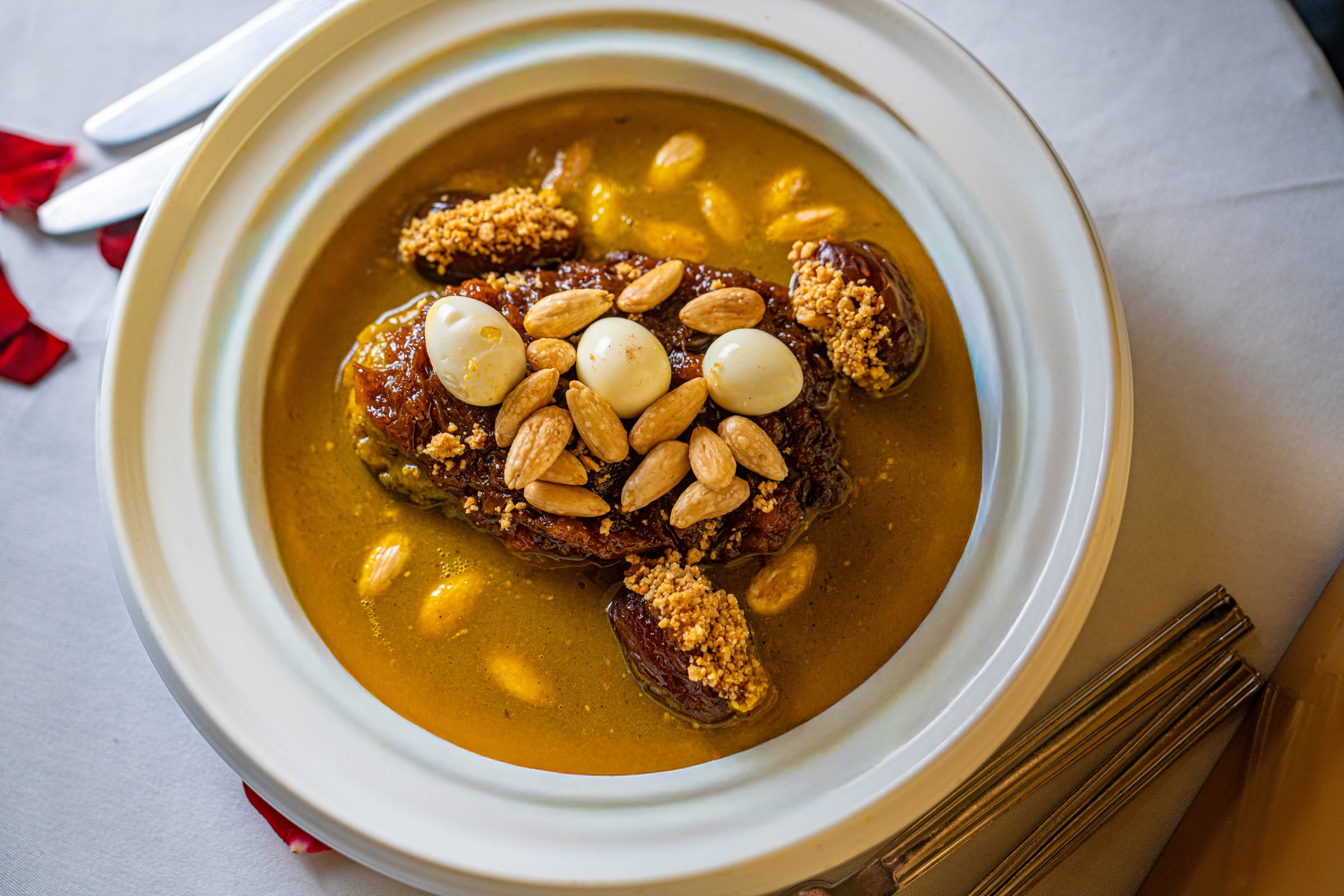
Among the most celebrated are lamb tfaya with caramelised onions and toasted almonds; mrouzia with ras el hanout and raisins, rooted in the culinary traditions of Eid; djaj m'kalli with preserved lemon and olives; and fish in chermoula, the fresh herb and spice marinade of Morocco's Atlantic coast.
The tagine at Dinarjat's table
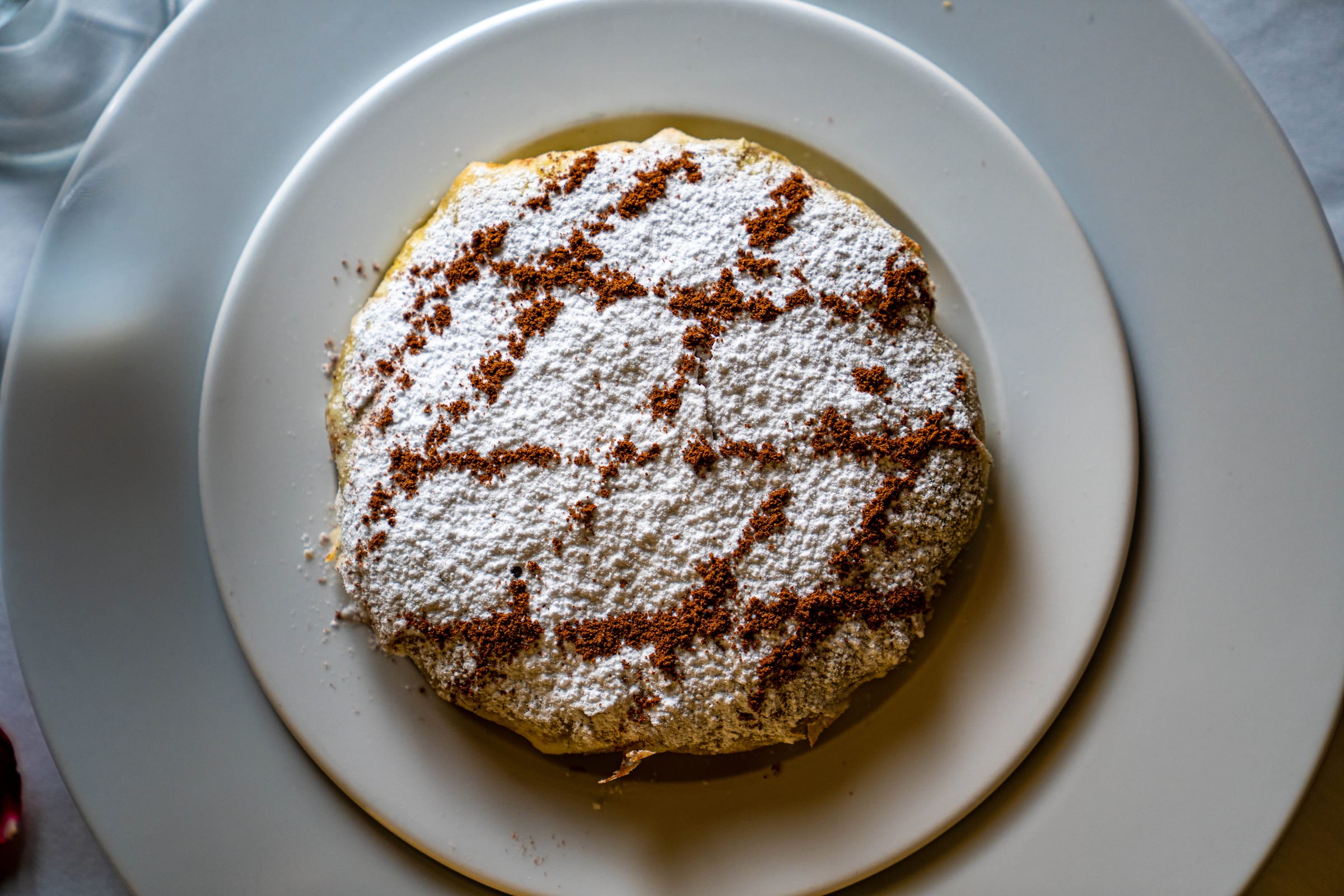
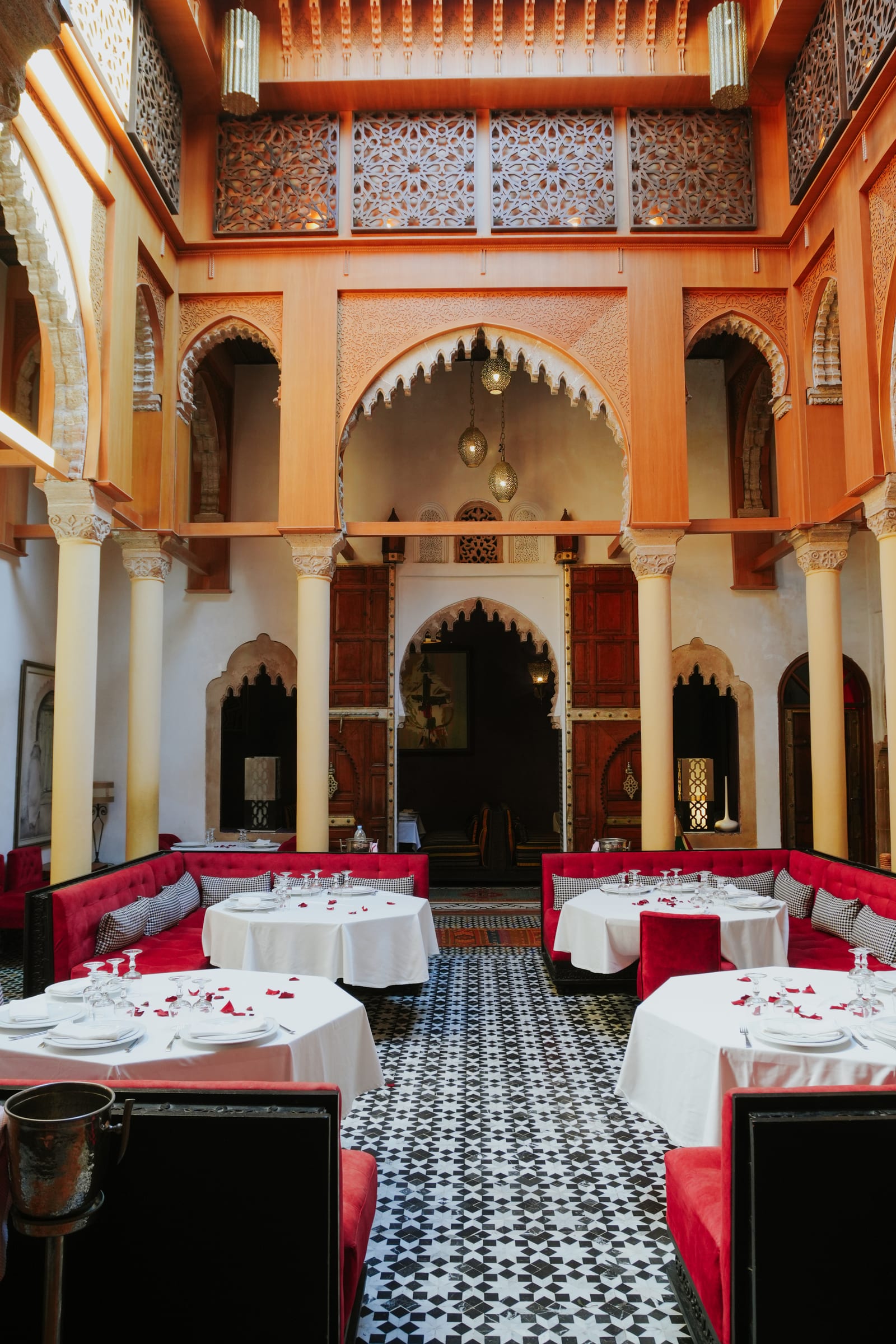
In our 1908 residence in the heart of Rabat's medina, our tagines follow the family recipes that have shaped Dinarjat's reputation since 1990: lamb tfaya, lamb shank with wild artichokes and mrouzia with honeyed almonds. They are served in decorative tagine dishes, with the same respect for slow cooking, balanced spices and the family traditions that define our cuisine.