Rabat is a city of contrasts: modern and serene on one side, ancient and intimate on the other. In 2012, UNESCO inscribed the city on the World Heritage List for its rare dialogue between 20th-century urban planning and Arab-Islamic heritage. That dialogue is best experienced in the medina, set between the Atlantic Ocean and the Bouregreg River.
The Kasbah of the Udayas
At the northern tip of the medina, the Kasbah of the Udayas has guarded the mouth of the Bouregreg since the 12th century. You enter through the monumental Almohad gate of Bab Oudaya, lose yourself in blue-and-white lanes, and linger in the Andalusian garden or the Moorish café overlooking Salé. Dinarjat is a few minutes' walk away, facing the Kasbah — the perfect stroll before dinner.
Rue des Consuls and craftsmanship
Once the historic thoroughfare of merchants and diplomats, Rue des Consuls is now home to weavers, leatherworkers and sellers of Rabat carpets, renowned for their Eastern-inspired knotted patterns. Unlike the souks of larger tourist cities, it invites unhurried browsing at the gentle pace that gives the capital its charm.
A medina to experience, not simply visit
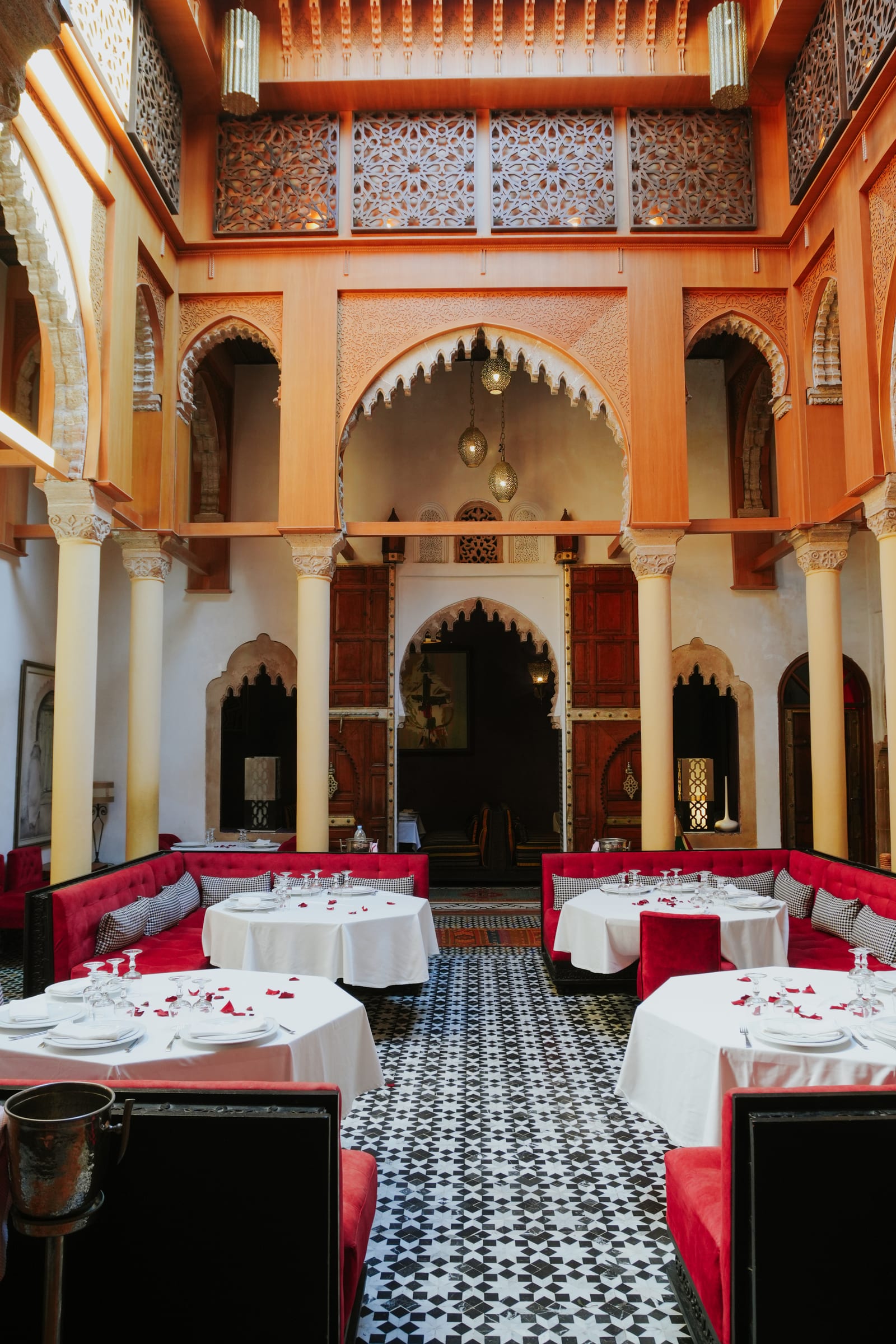
Rabat's medina is no stage set: people live, trade and pray here much as they did three centuries ago. Behind its studded doors stand residences built around patios, where zellij tilework, carved stucco and painted cedar create interiors that the street gives no hint of.
A table at Dinarjat
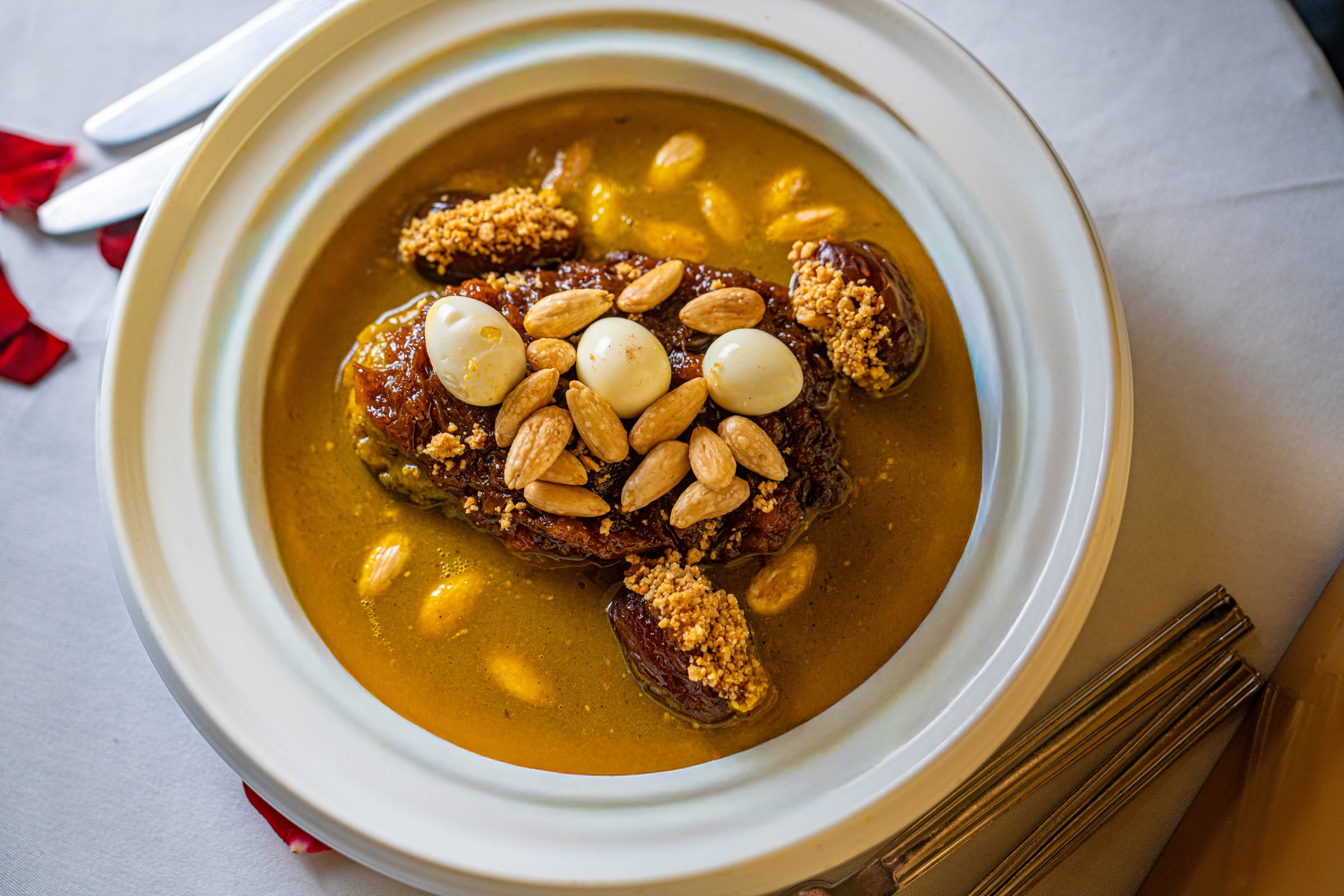
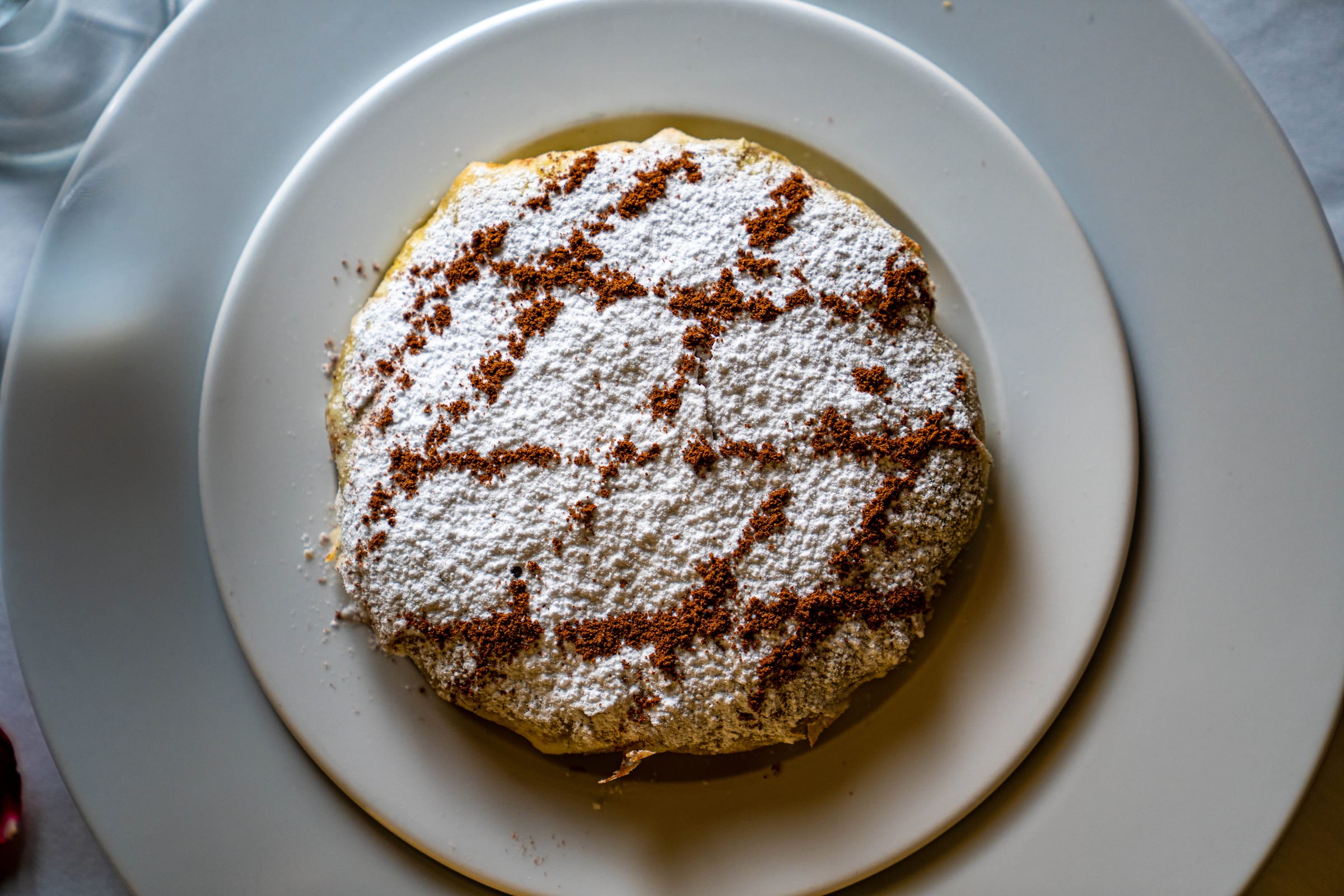
Dinarjat has welcomed guests since 1990 in one of these residences, built in 1908 on Rue Belgnaoui. Stepping through its ancient door continues the story of the medina through its most flavourful chapter: dinner by candlelight in the patio, accompanied by Andalusian music and rooted in Morocco's culinary heritage. We recommend booking your table before setting out on your walk.